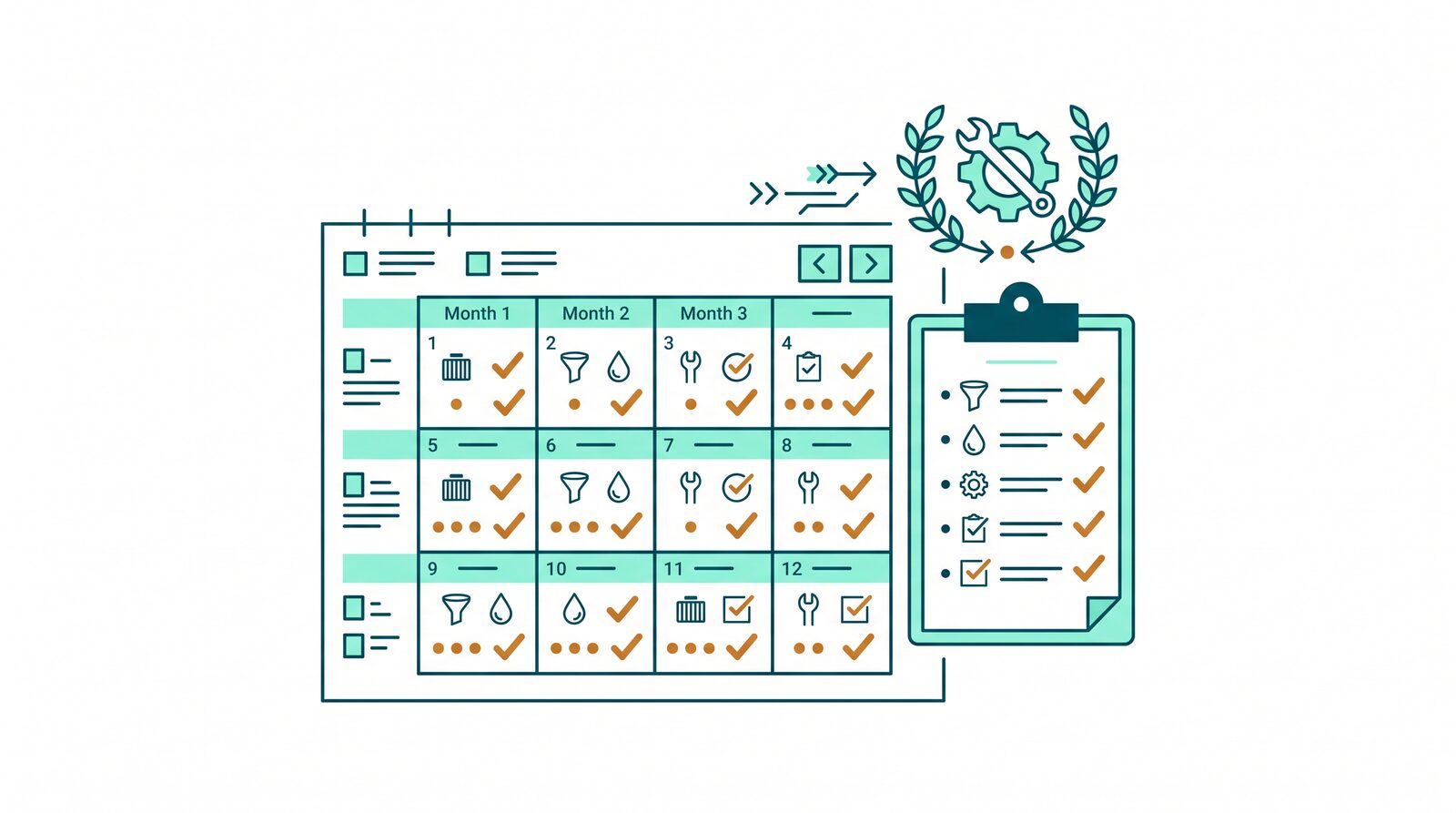
An annual maintenance contract is meant to replace unpredictable repair bills with a known cost and a planned schedule. Whether it delivers that depends almost entirely on how carefully the scope is defined before signing.
Most disputes about AMCs are not about quality of work. They are about whether a particular job was inside or outside the agreed scope.
Scope: the section that matters most
A well-written AMC states explicitly what is covered, system by system. Vague language such as "AC maintenance" is where problems begin. Look for a schedule listing:
- Every system and asset covered, with locations and quantities
- The specific tasks performed on each, at each visit
- Anything explicitly excluded
For air conditioning, for example, a clear scope specifies filter cleaning or replacement, coil cleaning, gas pressure checks, drain line flushing, electrical inspection and performance testing — not simply "servicing".
Visit frequency
The contract should state how many planned visits are included per year and at what intervals. In Dubai's climate, quarterly AC attention is a common baseline for residential properties, with commercial systems often requiring more.
Check whether visits are scheduled at fixed intervals or "as required" — the latter is considerably weaker and harder to hold anyone to.
Response times for unplanned issues
Planned maintenance is only half of what an AMC is for. The other half is what happens when something fails unexpectedly. The contract should define:
- Response time for emergency callouts, stated in hours
- Response time for non-urgent issues
- What actually constitutes an emergency
- Whether emergency callouts are included in the fee or charged separately
- Coverage outside normal working hours, and any premium that applies
The definition of "emergency" is worth reading carefully. A total AC failure in August is an emergency by any reasonable standard, but if the contract does not say so explicitly, you may find it treated as a routine callout with a next-available-slot response.
Parts, labour and what is excluded
This is the most common source of unexpected cost. Establish clearly:
- Whether consumables such as filters and gas top-ups are included
- Whether replacement parts are included, discounted, or fully chargeable
- Whether labour for repairs is included or only labour for planned maintenance
- Whether there is a value threshold above which work requires separate approval
- What is excluded entirely — typically major component replacement, damage from misuse, and pre-existing faults
A contract with a low headline price and everything chargeable as an extra is not necessarily cheaper than a higher-priced contract that includes consumables and repair labour.

Reporting
You should receive a written record after every visit stating what was inspected, what was done, what was found, and what needs attention. Without this there is no way to verify the contract is being delivered, and no asset history when systems are eventually replaced or the property changes hands.
For managed buildings, ask whether reporting is consolidated into a periodic summary as well as per-visit records.
Contract administration
Details that are easy to overlook and awkward later:
- Term and renewal. Does it auto-renew? What notice is required to end it?
- Price adjustment. Can the fee change mid-term, and on what basis?
- Termination. What are the exit conditions for both parties?
- Insurance. What cover does the contractor carry for damage caused during work?
- Personnel. Are technicians directly employed or subcontracted, and are they trained on your specific systems?
Comparing proposals fairly
Two AMC quotations are rarely comparable at face value. Before deciding on price, normalise them:
- List every asset each proposal actually covers
- Count the planned visits per year in each
- Note what consumables and parts each includes
- Compare emergency response commitments
- Identify what each excludes
Once the scopes are aligned, the price difference usually becomes explicable — and sometimes reverses.
Need this handled properly?
Optima Prime provides integrated facilities management across Dubai. Send us your property details for a free, itemized quotation.
Request a Quote