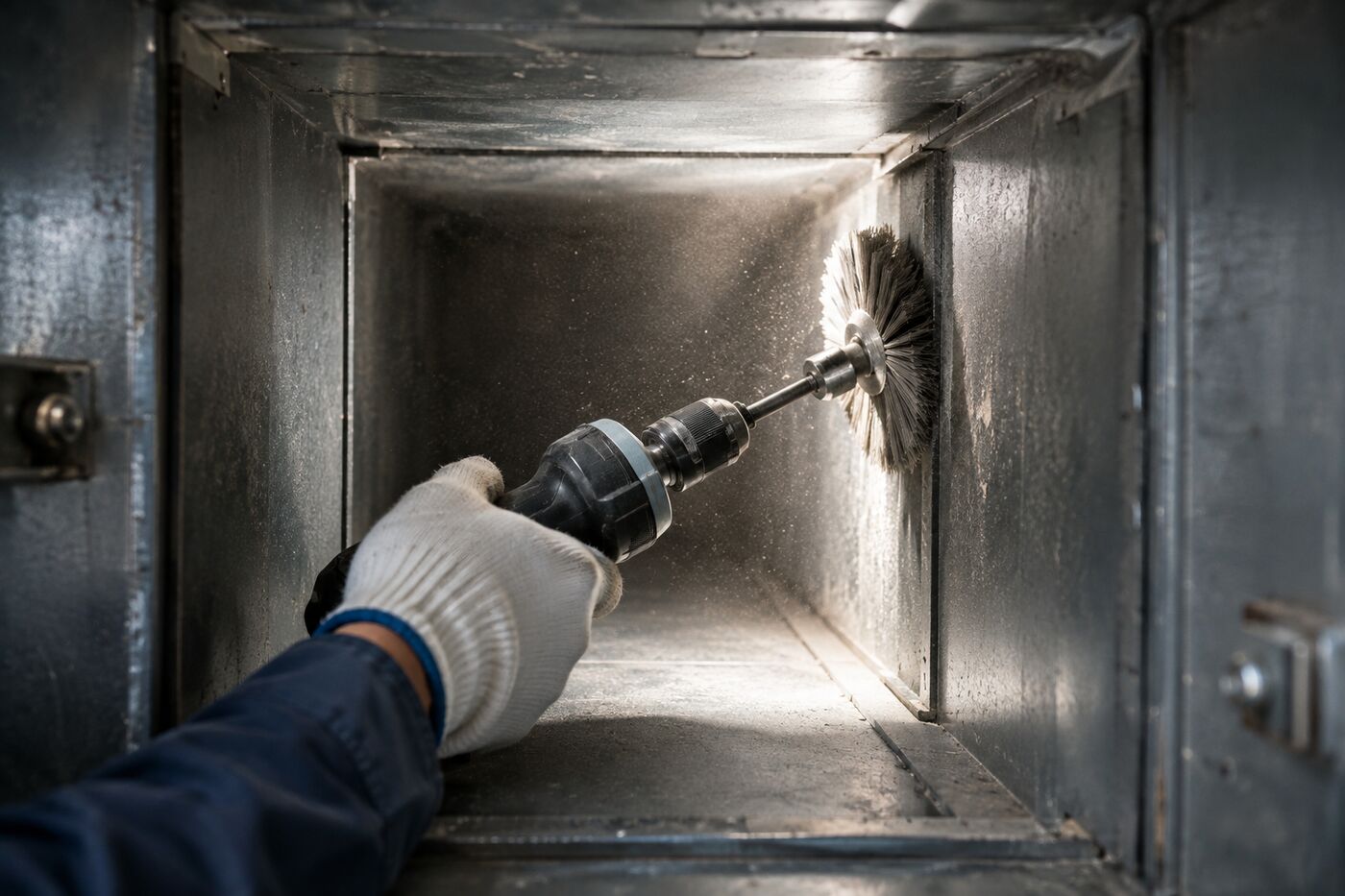
It is one of the most common questions we are asked by villa owners and building managers across Dubai, and the honest answer is that there is no single interval that fits every property. Duct cleaning frequency depends on how the building is used, what is around it, and how the system has been maintained up to now.
That said, there are sensible working ranges, and there are clear signs that a system is overdue. This guide covers both.
The short answer
For most properties in Dubai, a reasonable planning assumption is:
| Property type | Typical interval |
|---|---|
| Residential villa or apartment | Every 2–3 years |
| Office or commercial space | Every 1–2 years |
| Restaurant or food premises | Annually, or more often |
| Clinic or healthcare setting | Annually, subject to regulatory requirements |
| Property near ongoing construction | Annually |
These are starting points for planning a budget, not a substitute for inspection. A duct system that looks clean on inspection does not need cleaning simply because a calendar says so, and a system in a dusty environment may need attention sooner than the table suggests.
Why Dubai is a special case
Several factors specific to the region shorten the interval compared with temperate climates:
- Airborne dust. Fine desert dust is persistent and works its way past filters over time, settling on duct interiors and coils.
- Near-continuous runtime. Air conditioning in Dubai runs for most of the year rather than seasonally, so systems accumulate more operating hours than equivalent systems elsewhere.
- Humidity. Coastal humidity combined with cool duct surfaces creates conditions where moisture can collect. Dust plus moisture is what leads to microbial growth rather than dust alone.
- Construction activity. Properties near active sites take on significantly more particulate, and fit-out work inside a building will push debris into the system.
Signs your ducts are overdue
Regardless of when the system was last cleaned, these indicate it needs attention now:
- Visible dust on supply diffusers or return grilles, or dust blowing out when the system starts
- A musty or stale smell when the AC runs, particularly on start-up
- Uneven cooling between rooms served by the same system
- Cooling performance dropping without an obvious fault
- Occupants reporting increased dust settling on surfaces, or worsening allergy symptoms indoors
- Rising electricity consumption with no change in usage patterns
Worth knowing: restricted airflow makes the system work harder to reach the same temperature. Duct and coil cleaning is often justified on energy cost alone, before considering air quality at all.
What proper duct cleaning involves
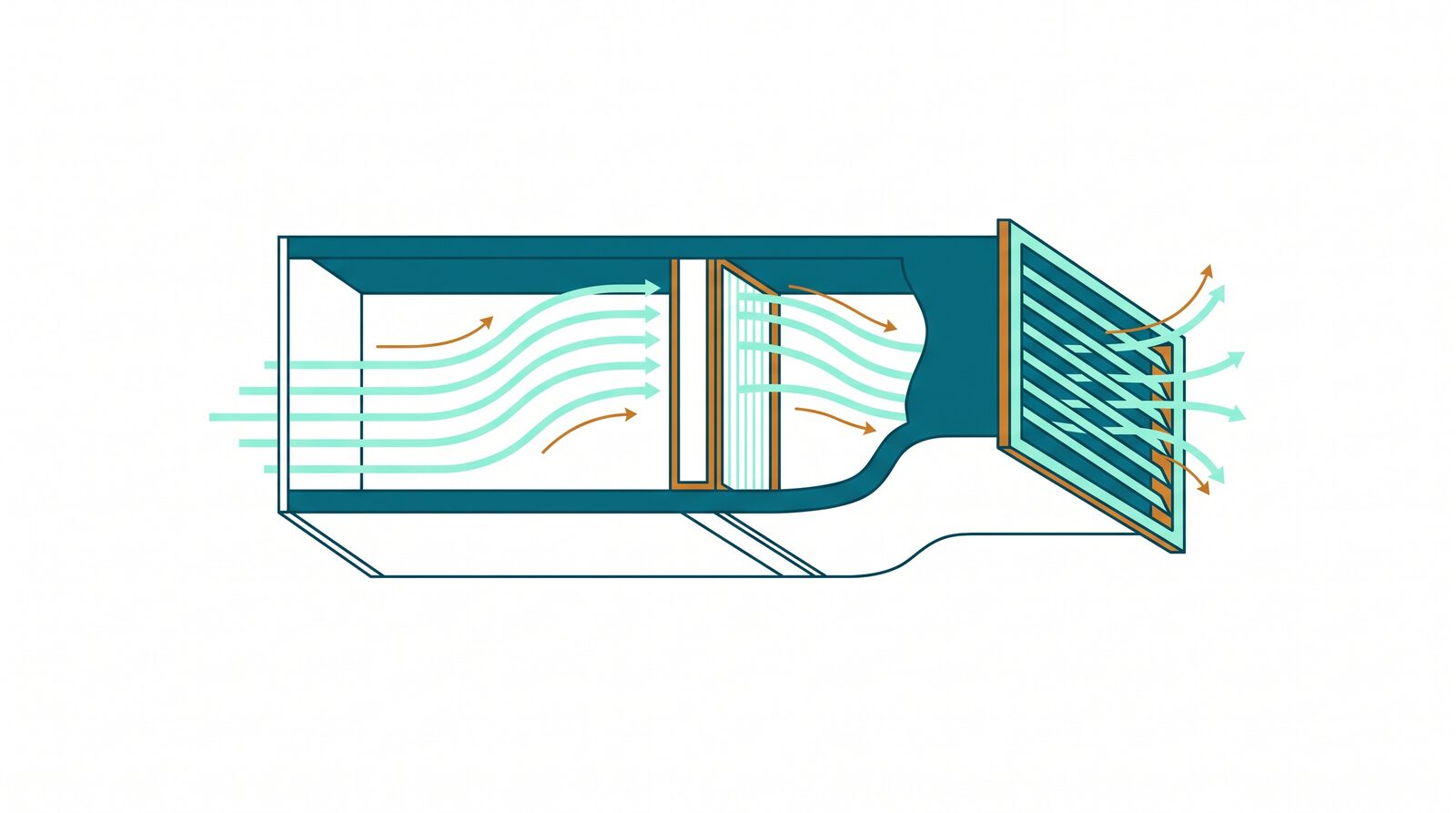
Not all duct cleaning is the same, and price differences usually reflect real differences in method. A thorough job includes:
- Inspection first. Assessing the actual condition of the duct interior before quoting, rather than pricing blind.
- Mechanical cleaning under vacuum. A duct sweeper vacuum system agitates and extracts debris rather than pushing it further into the system.
- Diffuser and grille cleaning. Supply diffusers, return air grilles and mixing boxes removed, cleaned and sanitized.
- Protection during work. Registers covered so debris is not released into the occupied space during the process.
- Coil and drain attention. Cleaning ducts while leaving dirty coils and a blocked drain line addresses only part of the problem.
- Encapsulation where required. Sealing interior duct surfaces where the lining condition warrants it.
If a quotation does not mention how debris is extracted, ask. Cleaning that dislodges dust without capturing it moves the problem rather than solving it.
Duct cleaning and AC servicing are different things
These are frequently confused. AC servicing covers the unit — filters, coils, gas levels, drainage, electrical checks — and should happen far more often, typically every three to six months in Dubai. Duct cleaning covers the distribution network the air travels through, and happens on the longer cycle described above.
A property on a regular servicing schedule will generally need duct cleaning less often, because less debris reaches the ducts in the first place.
Practical guidance
If you genuinely do not know when the ducts were last cleaned — which is the case for most properties changing hands — start with an inspection rather than assuming. A competent contractor will tell you honestly if the system does not need work yet, and that answer is worth more than a cheap unnecessary clean.
For buildings under management, put duct cleaning into the planned maintenance schedule with a defined interval and inspection points, rather than treating it as a reactive job when someone complains about a smell.
Need this handled properly?
Optima Prime provides integrated facilities management across Dubai. Send us your property details for a free, itemized quotation.
Request a Quote